.svg)
.svg)


So far, we’ve discussed how polarizers work - but where are they actually useful? It turns out that polarization-based technologies are everywhere - from medical optics and thermal imaging to laser control and advanced photography systems.
One simple, everyday example is polarized sunglasses. When light reflects off surfaces like wet roads or water, it becomes predominantly polarized in the horizontal direction (remember Brewster’s angle?). By using polarizers that filter out this polarization, glare is significantly reduced - that’s exactly how polarized sunglasses work. The same principle allows photographers to shoot below the water’s surface by using a horizontal linear polarizer to block surface reflections.

Beyond these uses, there’s a special imaging technology where each pixel is split into sections with polarizers oriented in different directions. This enables the measurement of the light’s polarization at every point in the image. Since different materials polarize light differently, this adds a whole new layer of information to the image and allows material differentiation. This technology is used in defense applications like advanced thermal imaging, helping to distinguish birds from drones or detect hidden objects in complex environments. You can see examples of such images taken by a polarimetric thermal camera developed by Frenel Imaging.

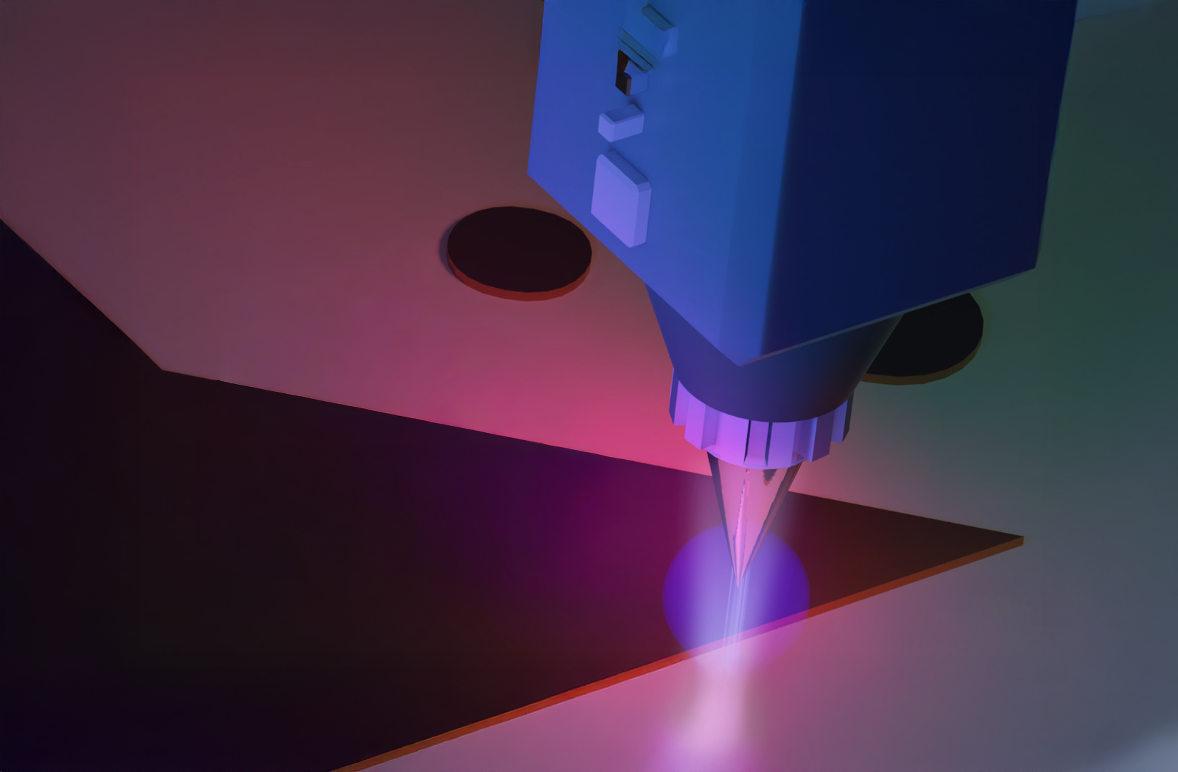
Additionally, polarizers are used in all laser-based systems, since lasers inherently emit light with a defined polarization. Polarizers and waveplates enable precise control over laser intensity and the combination of multiple beams using polarization beam splitters - or in this case, polarization combiners. Here, instead of discarding the rejected polarization, we actively use it.
Furthermore, polarizers are essential in LCD displays, where each pixel controls the amount of polarized light that passes through it, forming the image. They’re also used in stress analysis of structures and materials—changes in the polarization of light passing through a material can indicate deformation or stress. In astronomy, polarizers help analyze phenomena such as cosmic radiation, star disks, and magnetic fields around stars. Even in quantum communication, polarization is used to securely transmit information!
In the next article, we’ll talk about how combining polarizers with magnetic effects allows the creation of optical isolators - components that let light travel in one direction only.
Where do you encounter polarization-based technologies? Share with us!



.jpg)



.png)