femtosecond laser

Capabilities and examples

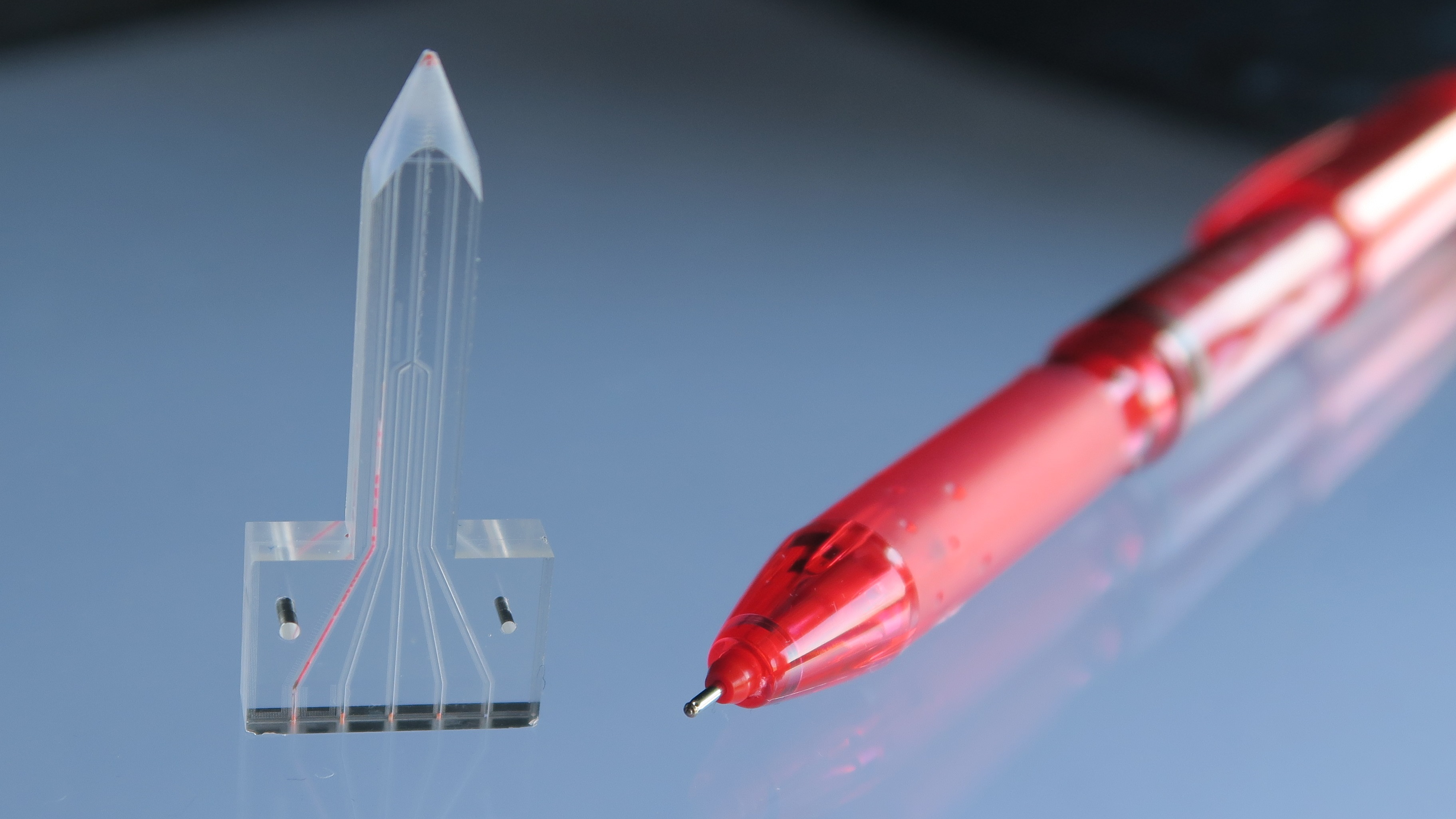
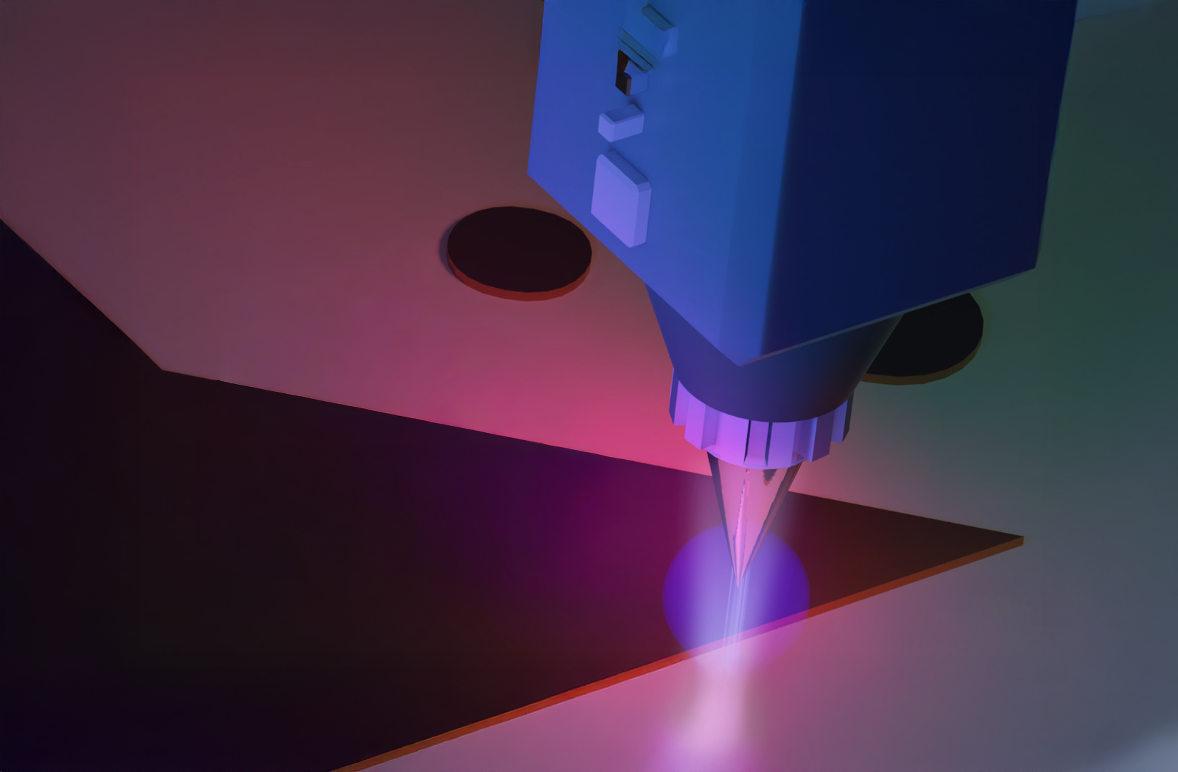
femtoprint enables high-precision, three-dimensional micro- and nanofabrication inside transparent materials using femtosecond laser technology, unlocking complex glass structures impossible with conventional manufacturing.

Femtoprint core technology is based on femtosecond laser direct writing, combined with selective chemical etching, allowing true 3D structuring inside bulk glass. This approach offers several key capabilities:

  • True 3D Microfabrication in Glass
    Unlike surface-based lithography, femtoprint’s process enables embedded channels, cavities, and optical elements inside a single monolithic glass substrate.
  • Sub-Micron Precision
    Feature sizes can reach the micrometer and sub-micrometer scale, with excellent repeatability and alignment accuracy.
  • Complex Internal Geometries
    Free-form shapes such as spirals, high-aspect-ratio channels, multi-level networks, and undercuts can be fabricated without bonding or assembly.
  • Material Advantages
    Fabrication is typically performed in fused silica or specialty glasses, offering:
    • High chemical resistance
    • Optical transparency (UV–IR)
    • Thermal stability
    • Long-term mechanical reliability
  • Monolithic Integration
    Mechanical, fluidic, and optical functions can be integrated into a single glass chip, reducing failure points and improving system robustness.
not sure what fits?

Let us help you

We love to solve this puzzle and find the right fit.
Heading for types of this product
Green Architecture
Evermind™ template is crafted like sustainable structures — clean, scalable, and built to last.
Precision Engineering
Every layout and component is tuned with variables and pixel-perfect details, so your brand stands on solid ground.
Dynamic Interactions
From nature-inspired transitions to fluid page structures, Evermind™ feels alive yet quietly sophisticated.
Green Architecture
Evermind™ template is crafted like sustainable structures — clean, scalable, and built to last.
Precision Engineering
Every layout and component is tuned with variables and pixel-perfect details, so your brand stands on solid ground.
Dynamic Interactions
From nature-inspired transitions to fluid page structures, Evermind™ feels alive yet quietly sophisticated.
No items found.
Related products
No items found.
Related News For this Product
No items found.
ready to start?
Stuck with a spec sheet that reads like sci-fi? Need a component that probably doesn't exist yet? Let's make it happen. Together.
FAQ

Questions, answered with clarity.

We’ve collected the questions we get all the time, and actually answered them. No mystery, no marketing poetry - just facts. Still have an open question? We're here to help:
Contact Us
What makes Femtoprint 3D waveguides different from planar waveguides?

They are written directly inside glass, allowing true 3D routing, crossings without interference, and compact layouts impossible with planar technologies.

Are the waveguides single-mode or multi-mode?

Both are possible. The mode profile can be tailored by laser parameters and geometry.

Can waveguides include bends and splitters?

Yes. Smooth 3D bends, Y-splitters, interferometers, and complex routing are standard features.

Why is glass attractive for quantum and photonic devices?

Glass offers ultra-low drift, high optical stability, and minimal sensitivity to temperature and vibration - perfect for quantum experiments.

Can multiple photonic functions be integrated in one chip?

Absolutely. Waveguides, couplers, interferometric paths, and alignment features can be monolithically combined.

New Products
Facing a Challenge? Let’s Solve It Together