SLED

Single-Channel Superluminescent Diode Source

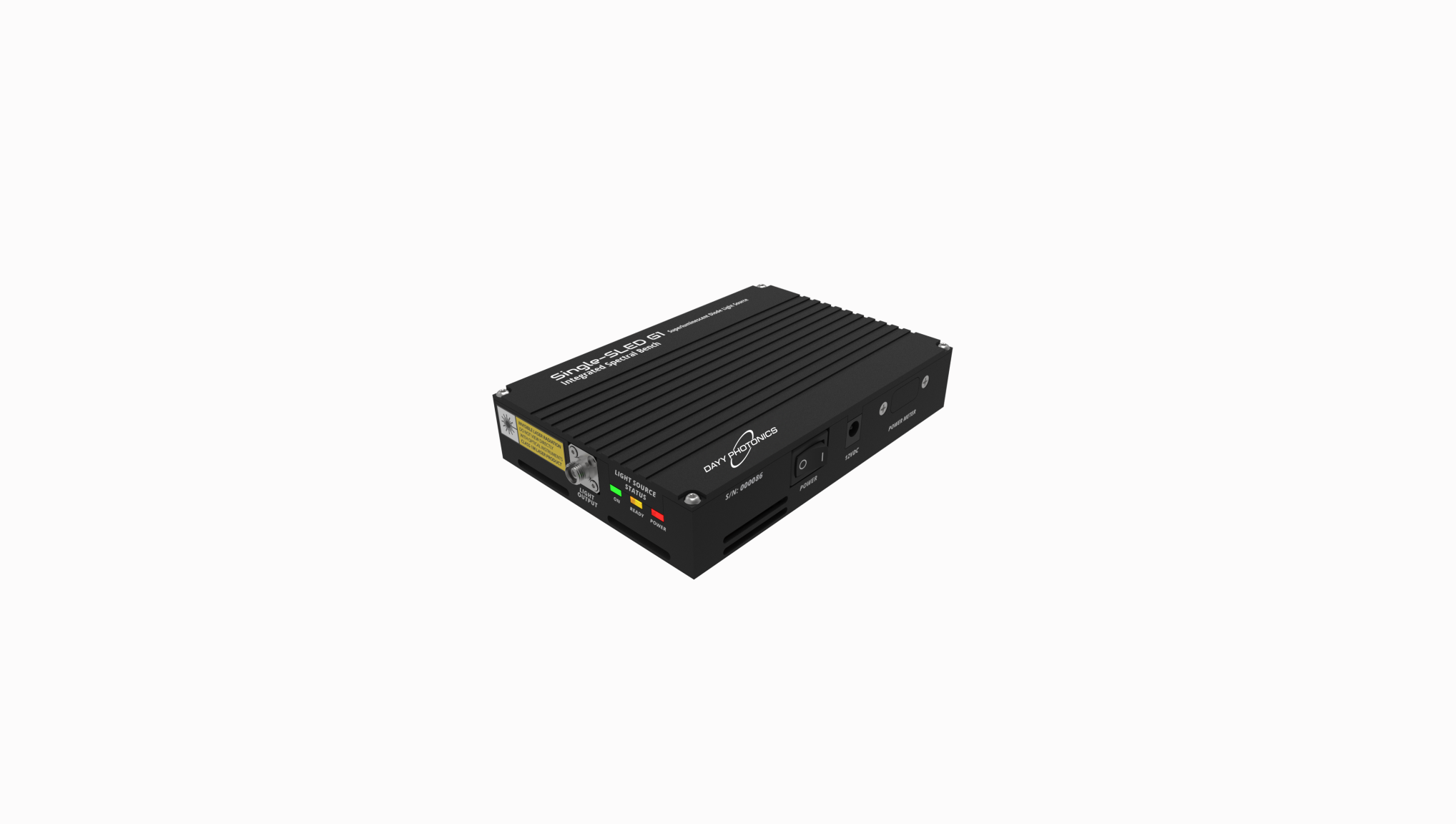
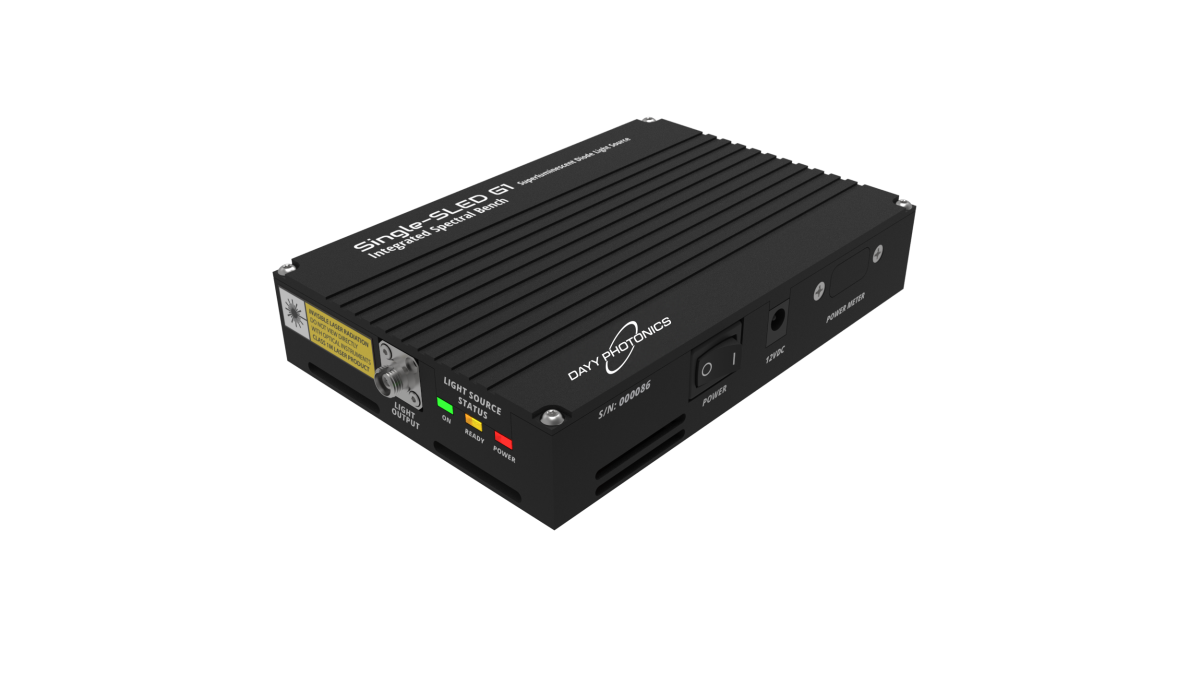
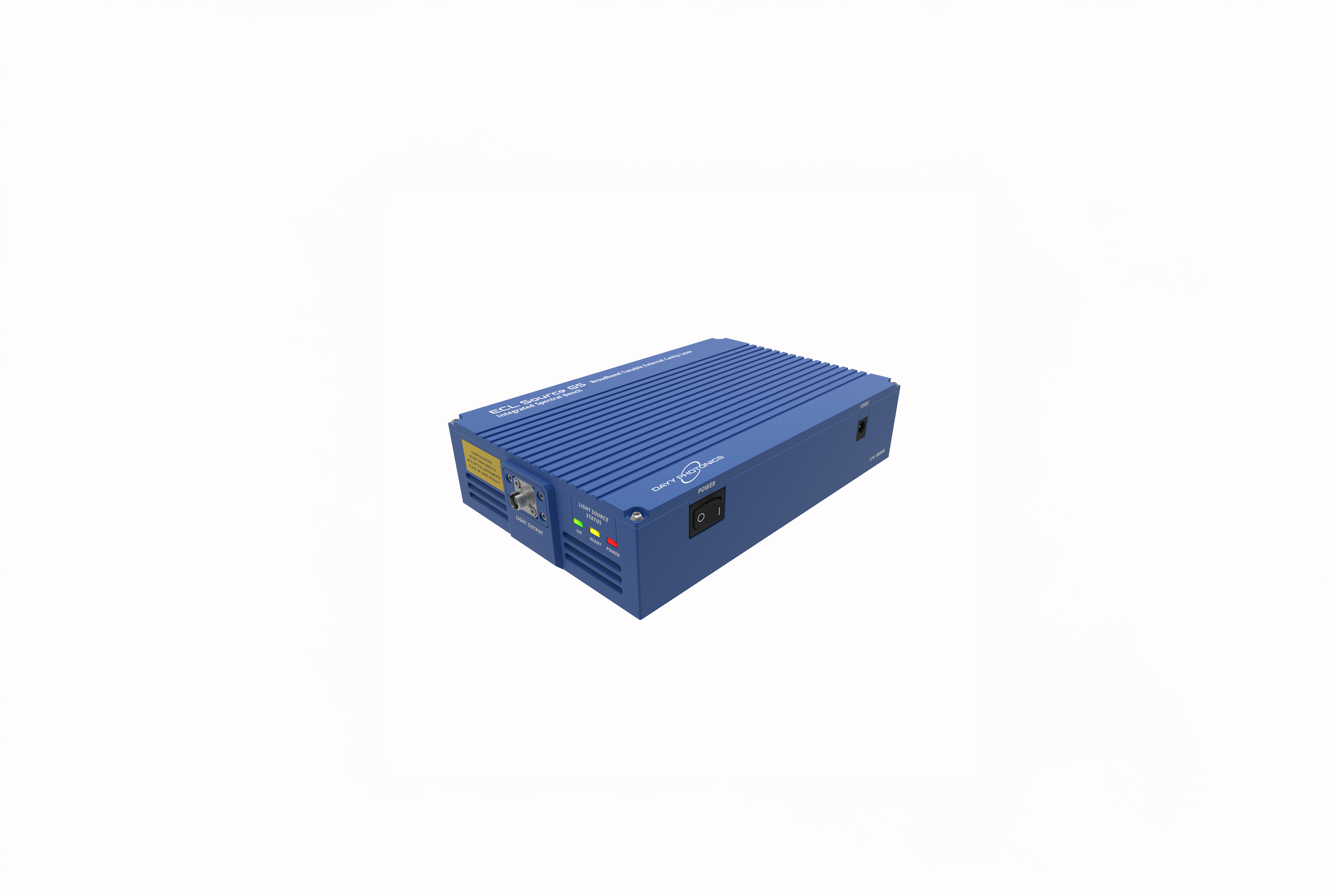
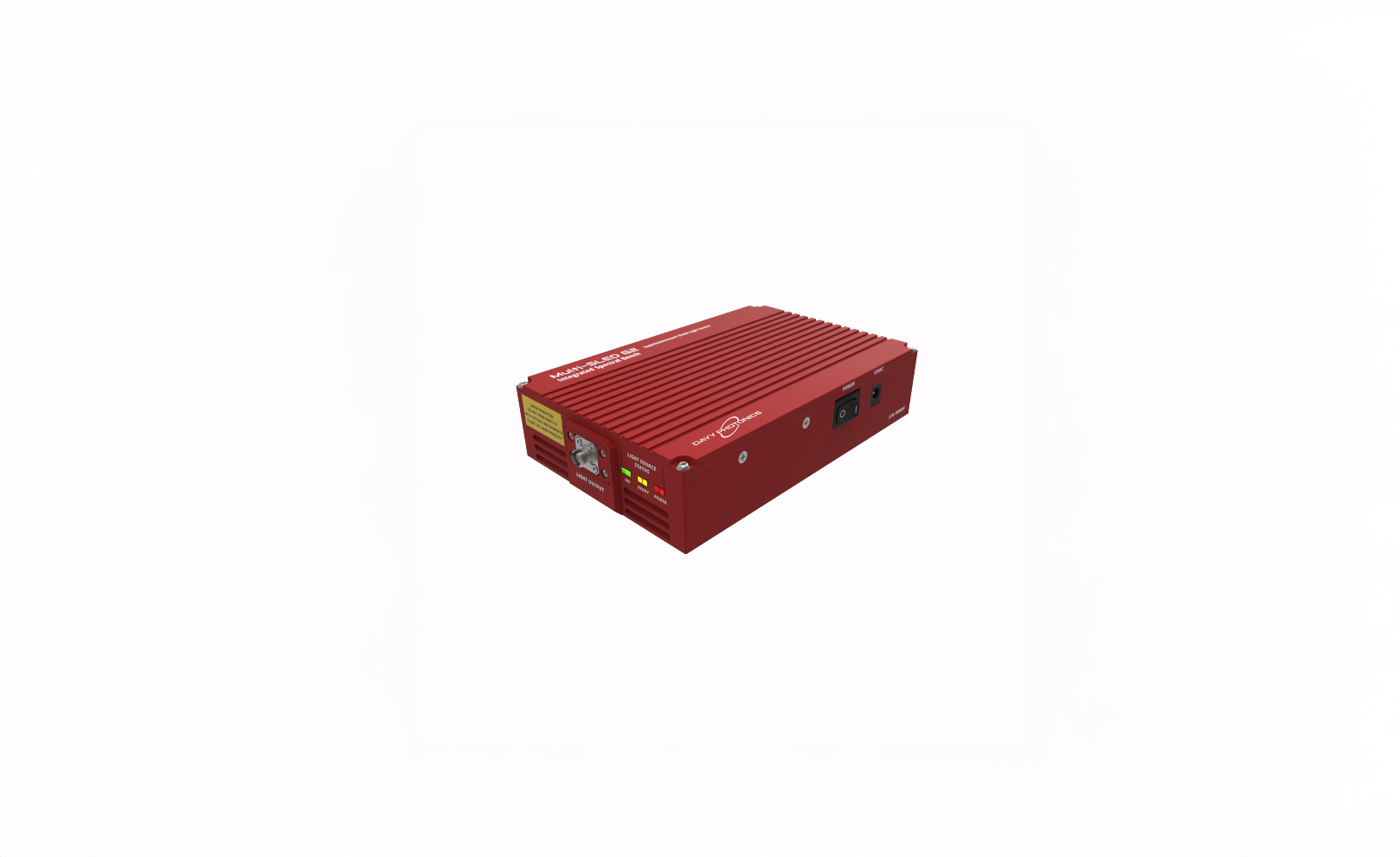
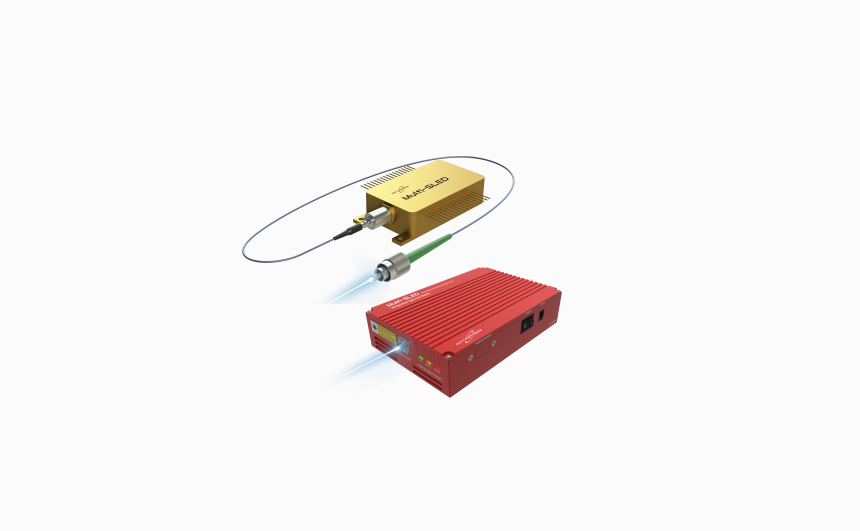
The DAYY Photonics Single-Channel Superluminescent Diode Source (ISB1) is a compact, turn-key broadband light source based on a superluminescent diode (SLED), offering stable high-brightness, low-coherence light with a broad spectral range for photonics applications.

The Single-Channel Superluminescent Diode Source from DAYY Photonics combines advanced superluminescent diode technology with an integrated spectral platform to deliver a versatile, reliable, and easy-to-integrate photonic light source for research, industrial, and medical use.

At the heart of this source is a superluminescent diode (SLED) - a semiconductor light emitter that bridges the gap between laser diodes and LEDs by producing high-brightness light with a broad spectral output and low temporal coherence. This makes SLED sources ideal for applications where broad wavelength coverage and minimal interference effects are critical, such as optical coherence tomography (OCT), optical sensing, telecom test equipment, and advanced imaging systems.


not sure what fits?

Let us help you

We love to solve this puzzle and find the right fit.
Heading for types of this product
Green Architecture
Evermind™ template is crafted like sustainable structures — clean, scalable, and built to last.
Precision Engineering
Every layout and component is tuned with variables and pixel-perfect details, so your brand stands on solid ground.
Dynamic Interactions
From nature-inspired transitions to fluid page structures, Evermind™ feels alive yet quietly sophisticated.
Green Architecture
Evermind™ template is crafted like sustainable structures — clean, scalable, and built to last.
Precision Engineering
Every layout and component is tuned with variables and pixel-perfect details, so your brand stands on solid ground.
Dynamic Interactions
From nature-inspired transitions to fluid page structures, Evermind™ feels alive yet quietly sophisticated.
Key Features
  • Broadband Emission: Wide spectral output configurable across multiple center wavelengths - from visible/near-IR bands (e.g., 770 nm) up to the extended near-IR range (up to ~1680 nm), supporting a wide range of optical systems and research experiments.
  • Highly Stable Performance: Incorporates the DAYY Optical Spectral Engine (OSE1), designed for stable power, smooth spectral profiles, and consistent performance in bench-top or system-embedded environments.
  • Ease of Integration: Compact, user-friendly turnkey module with standard optical connectors (e.g., FC/APC, optional FC/PC or SMA), multiple control interfaces (USB, RS-232), and an intuitive software GUI/API for automation and monitoring.
  • Precise Output Control: Full power control (from 0 % to max) with optional built-in monitoring photodiode and low-degree-of-polarization options, minimizing polarization effects in fiber-optic systems.
  • Versatile Applications: Ideal for telecom test equipment, optical component testing, OCT imaging systems (medical and industrial), metrology, fiber-optic gyroscopes, optical sensing, and research & development labs.

Key Features
  • Broadband Emission: Wide spectral output configurable across multiple center wavelengths - from visible/near-IR bands (e.g., 770 nm) up to the extended near-IR range (up to ~1680 nm), supporting a wide range of optical systems and research experiments.
  • Highly Stable Performance: Incorporates the DAYY Optical Spectral Engine (OSE1), designed for stable power, smooth spectral profiles, and consistent performance in bench-top or system-embedded environments.
  • Ease of Integration: Compact, user-friendly turnkey module with standard optical connectors (e.g., FC/APC, optional FC/PC or SMA), multiple control interfaces (USB, RS-232), and an intuitive software GUI/API for automation and monitoring.
  • Precise Output Control: Full power control (from 0 % to max) with optional built-in monitoring photodiode and low-degree-of-polarization options, minimizing polarization effects in fiber-optic systems.
  • Versatile Applications: Ideal for telecom test equipment, optical component testing, OCT imaging systems (medical and industrial), metrology, fiber-optic gyroscopes, optical sensing, and research & development labs.

Key Features
  • Broadband Emission: Wide spectral output configurable across multiple center wavelengths - from visible/near-IR bands (e.g., 770 nm) up to the extended near-IR range (up to ~1680 nm), supporting a wide range of optical systems and research experiments.
  • Highly Stable Performance: Incorporates the DAYY Optical Spectral Engine (OSE1), designed for stable power, smooth spectral profiles, and consistent performance in bench-top or system-embedded environments.
  • Ease of Integration: Compact, user-friendly turnkey module with standard optical connectors (e.g., FC/APC, optional FC/PC or SMA), multiple control interfaces (USB, RS-232), and an intuitive software GUI/API for automation and monitoring.
  • Precise Output Control: Full power control (from 0 % to max) with optional built-in monitoring photodiode and low-degree-of-polarization options, minimizing polarization effects in fiber-optic systems.
  • Versatile Applications: Ideal for telecom test equipment, optical component testing, OCT imaging systems (medical and industrial), metrology, fiber-optic gyroscopes, optical sensing, and research & development labs.

Related products
No items found.
Related News For this Product
No items found.
ready to start?
Stuck with a spec sheet that reads like sci-fi? Need a component that probably doesn't exist yet? Let's make it happen. Together.
FAQ

Questions, answered with clarity.

We’ve collected the questions we get all the time, and actually answered them. No mystery, no marketing poetry - just facts. Still have an open question? We're here to help:
Contact Us
PowerPhotonic is a pioneer, solving challenges using freeform wafer scale optics
What does “superluminescent diode” mean?

It’s a semiconductor light source that combines high brightness with a broad spectrum, similar to a laser diode but with low coherence. Useful where a wide, smooth spectrum is required.

What wavelengths are available?

Models cover multiple centre wavelengths from ~770 nm up to ~1680 nm.

Can I control output power and monitoring?

Yes - models offer precise power control from 0 % to 100 % and some include a monitor photodiode.

Is there low polarization output?

Low degree of polarization (DOP) output options (<5 %) are available to minimize polarization effects in sensing systems.

What makes this different from a laser?

Unlike a laser, a SLED produces broadband, low-coherence light - better for high-resolution imaging and interferometric measurement with reduced speckle.

New Products
Facing a Challenge? Let’s Solve It Together