.svg)
.svg)
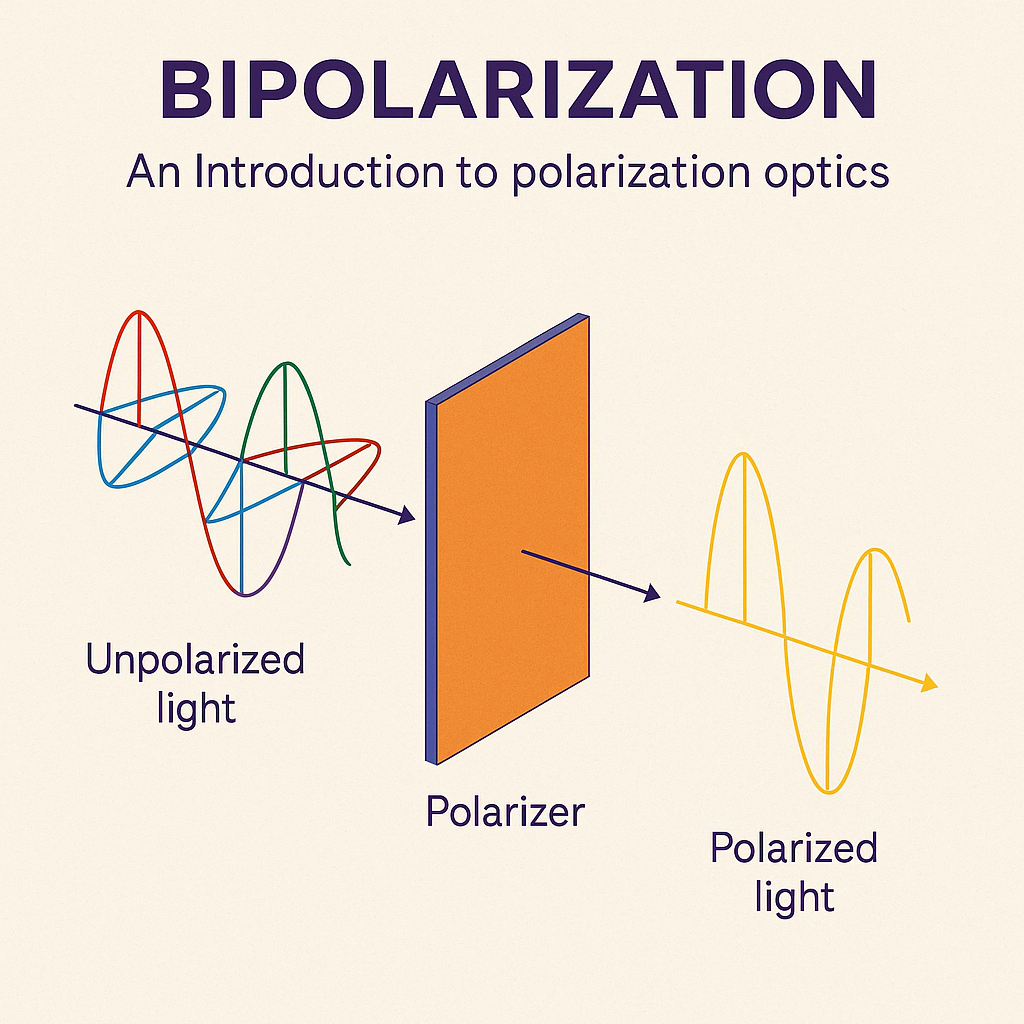

Polarization is a property of light - a property that is invisible to the naked eye. Unlike wavelength, which appears as visible color, polarization cannot be detected by just looking. Nevertheless, it greatly affects how light behaves when it passes through different materials, enabling surprising technologies and applications.
The reason polarization exists is because light is an electromagnetic wave - that is, an electric field and a magnetic field oscillating and propagating together through space. Like any wave, the electric field has amplitude and phase, but what makes light unique is that the field is vectorial - in other words, it has a direction.
When light propagates in a certain direction, say along the Z-axis, the electric field at any given moment points in some direction lying in the plane perpendicular to the direction of propagation - that is, in the XY plane. This direction changes over time - and the pattern of its oscillation is what defines the polarization of the light.
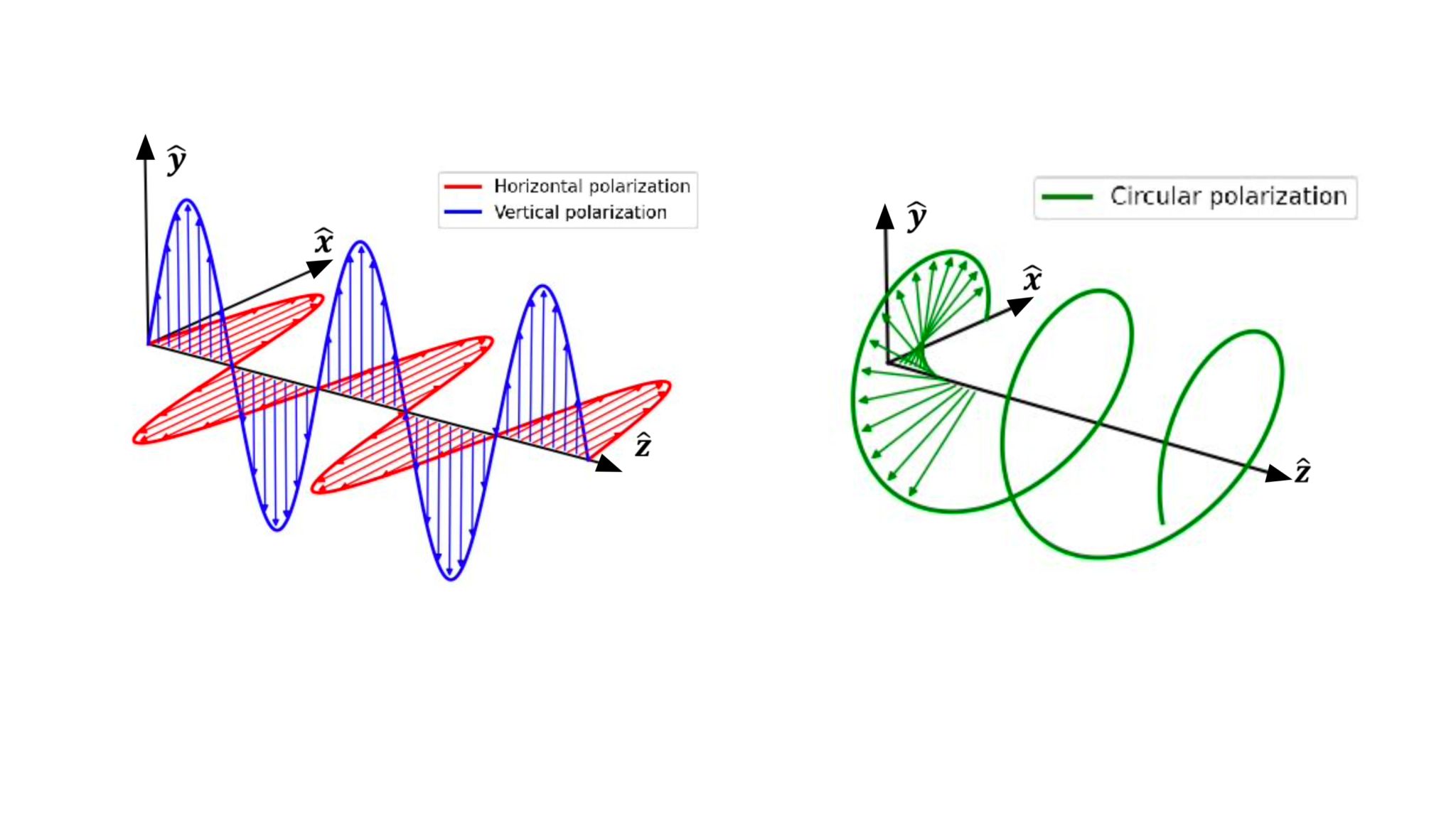
The simplest form is linear polarization: the tip of the arrow oscillates back and forth along a straight line. If the motion is only along the X-axis, we call it horizontal polarization; if it’s only along the Y-axis, we call it vertical polarization (see the left image). When light oscillates along both axes, the type of polarization depends on the phase difference between them and their relative amplitudes. If the oscillations are synchronized, we still get linear polarization, just at a diagonal angle. If the components are equal in amplitude but have a phase difference of 90 degrees, the tip of the arrow traces a circular path - this is circular polarization (see the right image). In more general cases, the path will be elliptical, resulting in elliptical polarization.
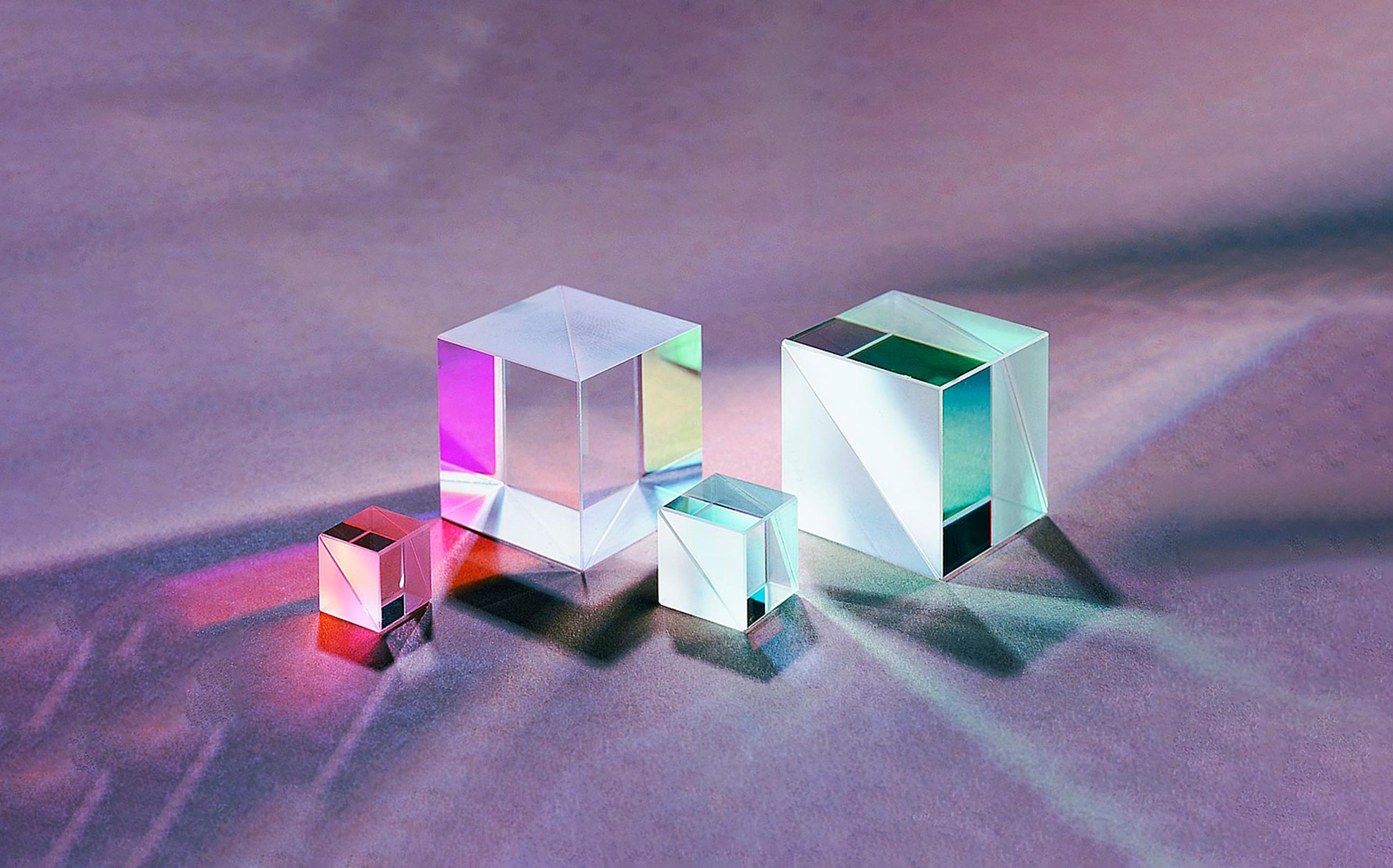
In the next articles in the series, we’ll dive into the components that allow us to control the polarization of light, explore polarization-based applications, and more. Where do you encounter polarization in your work? Share with us!



.jpg)



.png)